Why a Pause Can Give a Festival Day Its Shape
Festival day pacing improves when activities have room to settle. Learn how to shape useful pauses so visitors can reset, move freely and choose what comes next.
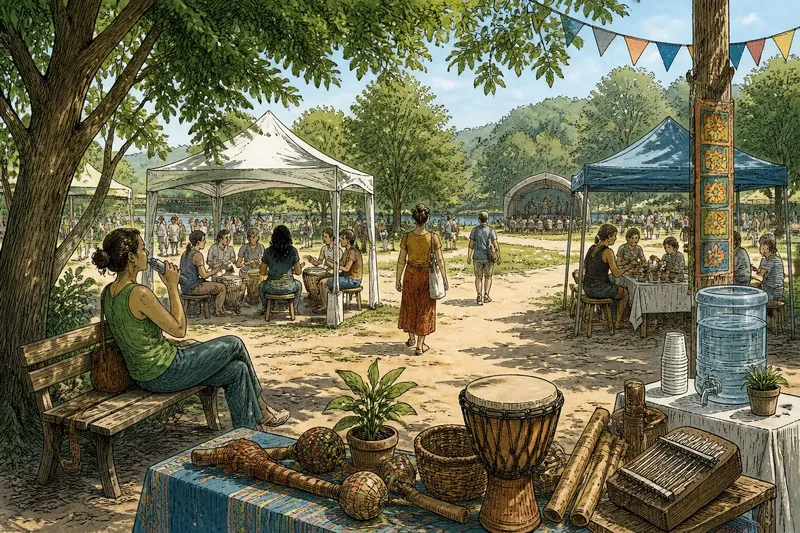
You have just left a lively drumming performance at a neighbourhood festival. The next workshop begins soon, but the walk takes you past a shady bench, a water station and a display of handmade instruments. That unprogrammed stretch is part of the day, too. Festival day pacing works best when a pause feels like a change of gear, not wasted time.
Planning intervals is not the same as scheduling an activity for every gap. Consider what people may need after a particular experience: a quiet minute, a chance to talk, time to find the next venue or simply permission to choose what happens next. A well-placed pause lets the day vary in texture while leaving visitors in charge of their attention.
Two daily rhythms
Imagine a clearly hypothetical community arts festival called Riverside Day. Its organisers have planned participatory music in the morning, a midday craft session and short performances in the afternoon. In an early draft, the sessions sit close together. A visitor leaving the music tent would have to rush to the craft table or miss its opening activity.
The organisers reconsider the transition rather than adding another attraction. They leave a flexible interval after the music, with seating near the tent, water available and a clear path towards the craft area. The craft session begins with a gentle task, so people can join at different moments without interrupting a demonstration.
The expected observable result is a day that feels less like one continuous demand for attention. Some visitors may sit, others may chat or wander, and others may head towards the next activity. The interval has a shape because it offers options without requiring anyone to take them.
Distinct kinds of pause
A pause need not be silent or empty. It can be social, restful or exploratory, but it helps to decide which kind the surrounding programme calls for. A high-energy dance session may be followed by a calmer stretch; a reflective storytelling circle might give way to a lively open space. If every interval feels identical, the schedule can blur into a long wait.
Think of the programme as a tray with separate compartments. The dividers do not remove anything from the meal; they help each flavour remain distinct. At a festival, transitions can do similar work, giving a performance, meal or workshop room around it.
For Riverside Day, the organisers consider what each section asks of visitors:
- After participation: Check whether people need to put down materials, finish a conversation or move to another area. If so, leave a flexible transition; otherwise, keep the next activity easy to join without a long wait.
- After a loud performance: Check whether a quieter place to sit or speak is nearby. If it is, make that option clear; if not, move seating away from amplified sound or identify a calmer area.
- Before a popular session: Check whether arrival depends on the previous activity ending exactly on time. If it does, allow a separate arrival window; if it does not, keep the sequence and make the route clear.
- Between distant areas: Check whether visitors must cross the site to reach the next event. If they do, treat the walk as part of the transition; if they do not, use the space for a shorter, more open pause.
- During a long festival day: Check whether visitors have a chance to eat, rest or follow an unexpected interest. If not, leave an unprogrammed period; if they do, keep that choice visible in the schedule.
- At a drop-in activity: Check whether it could draw a queue that blocks a route or takes up the intended rest time. If it could, move it away from the walkway or offer a quieter alternative; if it could not, keep it available as an optional stop.
These are planning prompts, not fixed rules. A pause that helps after one event may feel unnecessary after another. Consider the pace, setting and likely needs around each activity instead of inserting identical gaps throughout the schedule.
Festival day pacing questions?
How long should a festival pause be?
There is no single interval that suits every programme. Allow enough room for the likely transition, then check whether visitors have a real choice during that time rather than being stranded between events.
Should pauses include activities?
They can, provided participation remains optional. A drop-in drawing table or informal music-making spot may give visitors something to do without turning the interval into another appointment.
What if a session runs late?
Build flexibility into the next activity, especially when people need to travel between locations or reset shared equipment. Give calm, clear updates so visitors can decide whether to wait, take a break or choose something else.
How can organisers spot a crowded schedule?
Look at practical transitions: queues stretching into walkways, visitors arriving flustered or people leaving one event early to reach another. These visible signs can prompt a schedule adjustment without assuming every quiet moment needs a new feature.
Choices between events
At Riverside Day, the afternoon performances are close together, so visitors might feel obliged to stay in one place. The organisers create a broad interval after the craft session, make the next performance easy to find and provide a quieter seating area away from the stage. No sign tells people how to spend the time; the layout makes several choices clear.
Say one visitor has been helping with a clay activity and wants to see the afternoon music, while their friend would rather rest. The visitor can follow the programme to the stage, and the friend can take a seat without having to negotiate a second event. The expected result is a more comfortable reunion later: each person has had a say in the day’s pace rather than one having to keep up with the other.
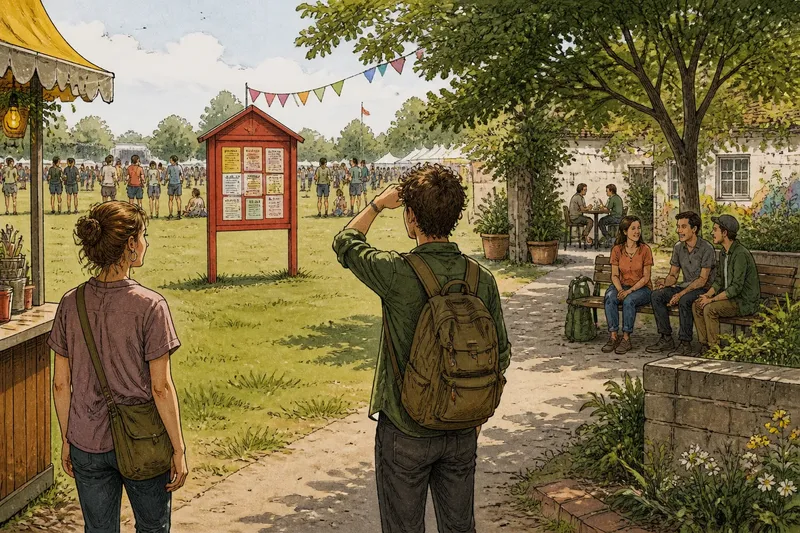
Small practical details support that freedom. Put schedule information where people can consult it without blocking an entrance. Make walking routes and seating easy to identify. If an interval includes food or a popular drop-in activity, check whether queues could consume the time intended for rest; if they could, place another option nearby or make the activity available at a different point in the programme.
The day as a sequence
Riverside Day’s organisers review the schedule from a visitor’s point of view. They note where sound, concentration, movement and social interaction build up, then look for a contrasting stretch nearby. The aim is not to impose a perfect rhythm. It is to keep the programme from asking for the same kind of attention at every turn.
When planning festival day pacing, start with the experience on either side of an interval. Ask what visitors may be carrying away from the first activity and what the next one asks them to bring. Then decide whether the space between should support rest, conversation, movement or open-ended choice. That check can make a pause feel like part of the programme without turning it into another task.
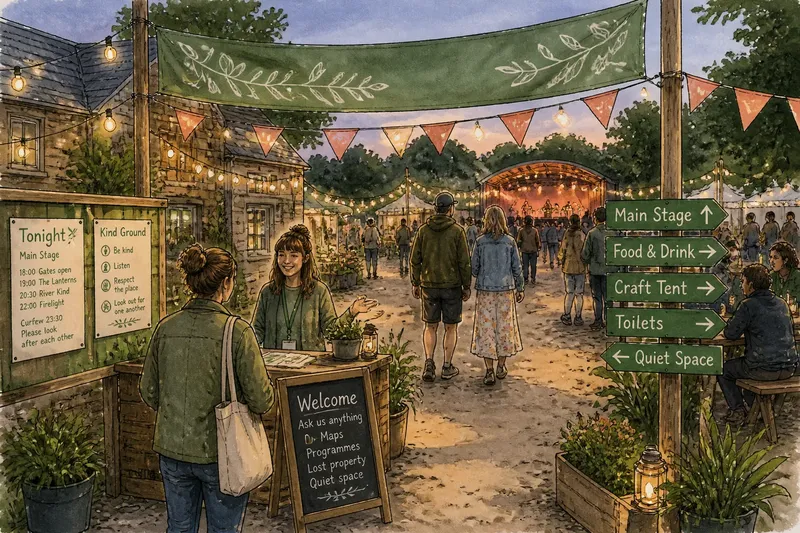
Treat the schedule as something visitors use, not merely something organisers publish. A clear start time matters, but so do a visible route, a place to sit and a credible option to skip an activity. Before publishing, check that each interval gives people enough information to choose their next move; if it does not, add a sign or a simple note to the programme.