Open Lawn or Clustered Courtyard: Choosing a Festival Meeting Place
Choose a festival meeting place that makes reunions easier and conversation more comfortable by comparing open lawns, courtyard pockets and site conditions.
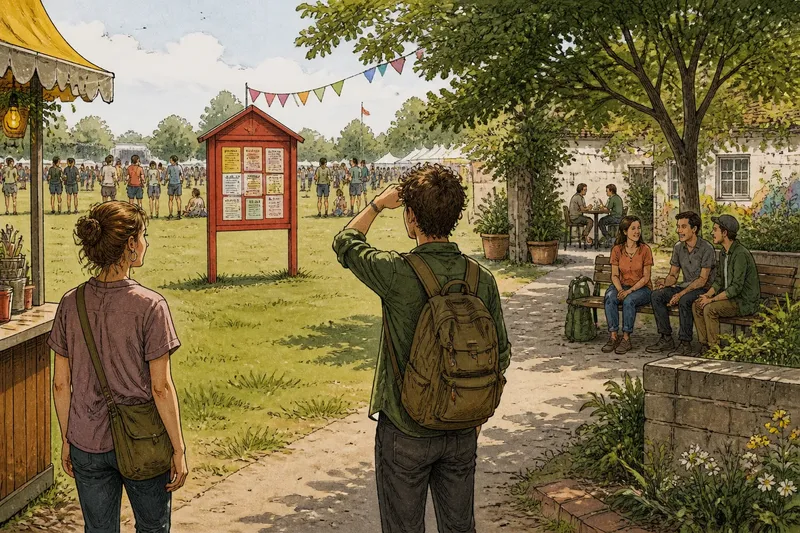
A friend waits beside a food stall while another scans the lawn for a familiar face. A clear festival meeting place can bring them together; a vague one can leave both circling. An open lawn and a cluster of smaller courtyard spots offer different ways to meet, wait and join a conversation.
Two meeting patterns
An open lawn gathers people around one recognisable area. It is easy to describe—“by the flag” or “beside the red noticeboard”—and people approaching from different directions can scan the space. This arrangement suits loose plans, staggered arrivals and groups that may change size.
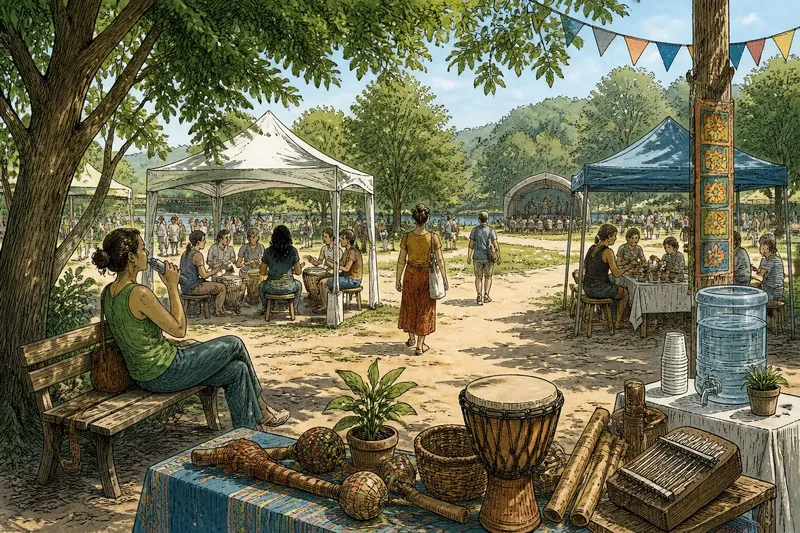
A courtyard cluster divides the area into smaller pockets: a bench under a tree, a low wall near a path, or a table beside a quiet corner. Distinct spots give people room to settle into smaller conversations without taking over the whole area. New arrivals can join one pocket or wait nearby.
The difference is like one large dining table compared with several smaller ones: the first keeps everyone in view, while the second lets separate conversations form.
Visibility and first contact
On an open lawn, sightlines help people scan, wave and recognise one another. That can make a broad meeting area easier to find, but a crowd may obscure the chosen landmark, and the exposed setting can feel less intimate.
Smaller spots can feel more sheltered, but each needs a clear identity. “By the benches” is hard to follow if every corner has identical seats. Give each pocket a visible cue, such as a distinctive tree, painted wall or path junction. Use cues to orient visitors rather than making every spot compete for attention.
Joining the conversation
An open lawn lets people approach from several directions, greet a group and move on. It can encourage casual encounters, though someone arriving alone may hesitate if the group forms a tight circle.
A courtyard cluster offers smaller thresholds. A newcomer can pause at the edge, listen, then join when there is an opening. Nearby pockets also let a gathering change size without everyone having to move together.
Keep the connections between pockets visible. If seats face only inward or barriers box in each spot, visitors may read it as private. Open paths and a few approachable edges make it easier to pause before joining.
Which layout fits?
Which space suits a large group?
An open lawn is often easier when people arrive separately and need to find one another. Name a landmark within it rather than asking everyone to meet “somewhere in the middle”.
Which space suits conversation?
A courtyard cluster can make conversation feel more manageable by separating a gathering into smaller pockets. Choose it when people are likely to linger, and keep the paths between spots open.
Can the layouts work together?
Yes. Use a lawn as the visible anchor, with smaller seating pockets nearby. People can meet in the open, then move to a quieter spot while keeping the main landmark in view.
What if the meeting point is crowded?
Choose a second recognisable point nearby, such as a marked path junction or a particular seating pocket. Avoid a narrow entrance or the middle of a busy route, where waiting could obstruct others.
Read the site conditions
Look at what already draws people through the area. A tree line, stage, food stall or main path may pull arrivals in a particular direction. An open lawn beside a busy route may be easy to spot but uncomfortable for a long conversation; a tucked-away courtyard may feel pleasant but be difficult to locate.
Notice where sound carries. A performance, announcement or food queue may make one edge harder for conversation. Check the ground, too: a slope, soft surface or muddy patch can influence where people naturally pause. Choose a place that suits the gathering rather than trying to remove every distraction.
Say an invented festival group expects friends to arrive in small waves. Some want to chat; others will only stop briefly. The organisers choose a lawn beside a red noticeboard as the rendezvous point, then identify benches along a quieter path for longer conversations. The expected result is a readily recognisable spot for quick greetings and nearby places to linger, with the visible path linking the two.
Make directions memorable
Pair the area’s name with a visible cue. “The lawn beside the red noticeboard” is clearer than “the grass near the food”. For a courtyard, name both the courtyard and the particular pocket, using a cue visible from the approach.
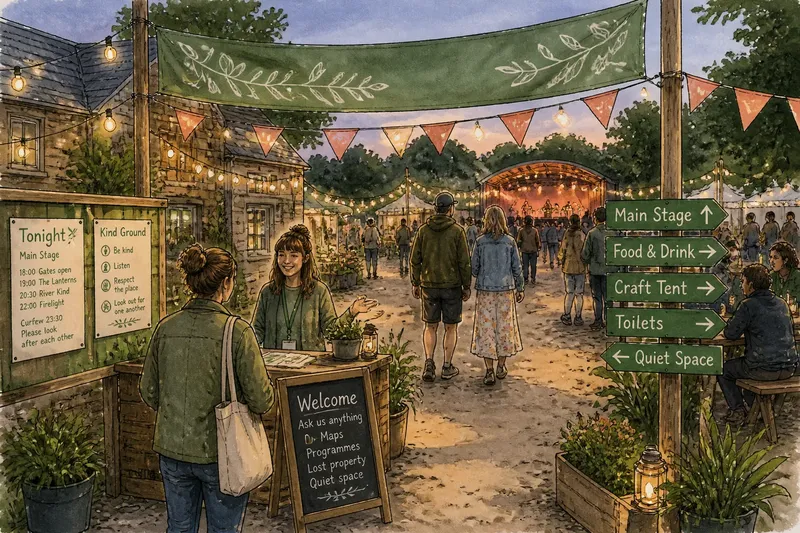
Put signs where visitors decide which way to go, not behind a stall where they may see them only after taking a wrong turn. If the site has a map, use the same meeting-point name on the map and signs so visitors do not have to match different labels.
Leave room around a lawn landmark for people to wait without blocking others. In a courtyard, make it clear that a pocket is open to visitors unless it is reserved or staff-only. These small cues help people tell whether they are welcome to approach.
Choose a festival meeting place
- Check whether arrivals can see the lawn from the main approach; if they can, use it as the meeting anchor, but if stalls or barriers hide it, choose a more visible point.
- Check whether the group needs to stay together; if most people will arrive at once, choose one landmark on the lawn, but if people will come and go, identify nearby pockets as alternatives.
- Check whether a courtyard pocket has a distinct cue; if its tree, wall or sign is recognisable from the path, name it in directions, but if it looks like the other spots, choose a clearer pocket.
- Check whether a busy path crosses the waiting area; if people can stand aside without obstructing traffic, keep the location, but if they would block the route, move the point to an open edge.
- Check whether nearby sound will interrupt conversation; if the quieter edge remains easy to find, direct longer chats there, but if it is difficult to reach, use the lawn for brief greetings instead.
- Check whether the map and signs use the same place name; if they match, share that wording, but if they differ, update the directions before visitors arrive.
Match layout to mood
Choose an open lawn when visibility, flexible arrivals and straightforward directions matter most. Choose courtyard pockets when people need room for smaller conversations and can still find the area easily. If the gathering needs both, connect a clear lawn landmark to distinct nearby spots.
The best festival meeting place is the one that makes the next move clear: where to look, where to wait and how to join. When choosing a festival meeting place, keep one useful detail in mind: directions should describe a cue visitors can see as they approach, not merely a feature they will recognise once they have already arrived.